Complexity, Brains, and Machines: Reflections on the AI-ABC Workshop

What connects the brain, the immune system, a city, an ant colony, and a large language model? The answer, explored intensively at the recent AI-ABC Workshop on Complexity Science, Complex Adaptive Systems, Neural Networks and AI, is this: all of them are complex adaptive systems — networks of interacting components that give rise to organised behaviour no single part could produce alone.

The workshop was a rich, hands-on exploration of ideas that sit at the intersection of science, technology, and philosophy of mind. It was, by any measure, a very successful one — the kind of gathering that generates more questions than it answers, and does so productively.

What Is a Complex Adaptive System?

A Complex Adaptive System (CAS) is characterised by several defining properties. It is composed of many interacting agents or elements — neurons, cells, people, software modules — each following local rules. Yet the system as a whole displays emergent properties: patterns, behaviours, and capacities that cannot be predicted simply by examining the parts in isolation.

CAS are also adaptive: they learn, reorganise, and evolve in response to their environment. They are neither fully ordered nor fully random — they operate at what complexity theorists call the edge of chaos, a regime of maximal flexibility and computational power.

Examples span every scale of nature and society: ecosystems, economies, immune systems, cultures, brains, and — increasingly — artificial intelligence architectures.

Neural Networks Through a Complexity Lens

One of the workshop’s central threads was the relationship between biological neural networks and their artificial counterparts. Modern deep learning systems — transformers, recurrent networks, convolutional architectures — are, in a technical sense, artificial neural networks. But how closely do they mirror the complexity of the brain?

The brain is not merely a network of weighted connections. It is a living dynamical system operating across multiple timescales simultaneously, self-organised through development, experience, and ongoing metabolic processes. Its computational power arises not from any single module but from the coordinated dynamics of billions of neurons operating in concert — and in tension.

Artificial neural networks, by contrast, are trained rather than developed, optimised rather than adaptive in the biological sense. They can perform remarkable feats — image recognition, language generation, strategic game-playing — but they remain brittle in ways biological systems are not. They fail catastrophically on inputs slightly outside their training distribution. They do not generalise the way humans do.

The workshop invited us to ask: what would it mean to build AI systems that were genuinely complex and adaptive — not just large and powerful, but dynamically organised in ways that resemble living systems?

AI as a Complex Adaptive System

Current AI systems are often discussed as tools — instruments that humans use to accomplish tasks. But from a complexity science perspective, they are increasingly becoming participants in complex adaptive systems: embedded in social, economic, and informational ecosystems, shaping and being shaped by the environments in which they operate.

This framing has profound implications. In a CAS, there is no central controller. Behaviour emerges from the interactions of many agents following local rules. When AI systems enter social ecosystems — recommending content, mediating communication, influencing decisions — they become agents in a system whose emergent properties no one has fully designed or can fully predict.

Understanding AI through the lens of complexity science is therefore not merely a theoretical exercise. It is a prerequisite for responsible deployment. We need to ask not just “what does this model do?” but “what kind of system does it help bring into being?”

Coordination and Synchrony

A particularly generative theme was coordination: how do elements in a complex system synchronise, differentiate, and maintain coherent organisation over time? In biological systems, coordination dynamics — the science of how coupled oscillators and distributed networks achieve flexible, context-sensitive entrainment — offers a powerful framework for understanding everything from motor control to social interaction.

In artificial systems, coordination is typically engineered: attention mechanisms, synchronisation protocols, shared memory architectures. But the workshop raised the question of whether richer, more biologically-inspired coordination mechanisms might yield more robust and adaptable AI — systems capable of the fluid, context-sensitive integration that characterises human cognition.

A Productive Day

The AI-ABC workshop brought together researchers, clinicians, engineers, and thinkers from different disciplines, united by a shared conviction: that understanding complex systems — and building AI responsibly — requires frameworks that go beyond linear causality and simple input-output models.

The conversations were lively, the ideas were genuinely challenging, and the sense of intellectual community was palpable. (Photos from the day are coming — watch this space.)

If the goal of such a workshop is to expand the conceptual vocabulary of everyone in the room, this one succeeded. Complexity science is not a niche specialty. It is a way of seeing — and in a world increasingly shaped by adaptive systems both biological and artificial, it is a way of seeing we urgently need.

Reimagining Psychotherapy: When Symptoms Are Attractors, Not Causes

What if the symptoms we try so hard to eliminate are not the problem, but the solution — at least from the perspective of the nervous system? This is one of the most provocative and generative questions animating current discussions in psychotherapy research, and it was at the heart of a structured discussion I recently participated in at the Society for Psychotherapy Research (SPR) Annual Conference in Osaka, 2026.

The Attractor Metaphor

In dynamical systems theory, an attractor is a state — or set of states — toward which a system tends to evolve over time, regardless of where it starts. Think of a ball rolling into a valley: no matter where you release it on the hillside, it will settle at the bottom. The valley is the attractor.

Now imagine that the valley is depression, or chronic anxiety, or a pattern of emotional dysregulation. The person keeps returning to this state — not because they want to, not because of moral weakness or poor coping — but because the system has organised itself around this pattern. It has become stable. It has become, in a very real sense, the path of least resistance.

This is what we mean when we say that symptoms can be attractors. They are not random misfirings or mere symptoms of some deeper hidden cause. They are organised states — self-reinforcing, coherent, and remarkably resistant to simple intervention.

Why This Reframing Matters

The conventional medical model treats symptoms as signs pointing to an underlying pathology. Remove the pathology, the symptoms disappear. This logic works well for many physical illnesses. But in mental health, it has consistently underdelivered. Decades of research into the causes of depression, anxiety, psychosis, and personality disorder have not translated into dramatically better outcomes. Symptom reduction rates remain stubbornly modest. Relapse is the norm, not the exception.

Part of the problem may be ontological: we have been looking for the wrong kind of thing. If a symptom is an attractor — a stable dynamic pattern — then eliminating it is not simply a matter of removing a cause. You cannot drain a valley by attacking the ball. You need to reshape the landscape.

This is a profound shift in therapeutic logic. Instead of asking “what is causing this symptom?”, we begin asking: “What conditions are maintaining this attractor? What would it take to destabilise it? And what new attractors — new stable patterns — could emerge in its place?”

Implications for Psychotherapy Practice

If symptoms are attractors, then psychotherapy is — in dynamic terms — a process of attractor landscape modification. The therapist and client together are not trying to eliminate a defect; they are working to shift the topology of the person’s psychological terrain.

Several implications follow from this:

Stability before change. Attractor states are, by definition, stable. Attempting to force change from outside — through behavioural prescriptions or cognitive challenges alone — often meets strong resistance, not because the person is unwilling, but because the system is organised to return to its stable state. Effective intervention may require first understanding the attractor before attempting to move it.

Phase transitions matter. In dynamical systems, change rarely happens gradually. Systems often remain in one attractor for long periods before shifting — sometimes rapidly — to another state. Therapy may work by creating the conditions for such transitions: increasing variability, building new repertoires, expanding the range of possible states before a new stable pattern emerges.

Small interventions, large effects — sometimes. Near a tipping point, even small perturbations can push a system into a new attractor basin. This may explain why certain therapeutic moments feel disproportionately impactful — they arrive at just the right point in the person’s dynamic landscape.

The therapeutic relationship as context. From this view, the therapeutic relationship is not merely a vehicle for technique delivery. It is part of the dynamic environment that shapes the attractor landscape. Safety, co-regulation, and relational repair may themselves contribute to destabilising pathological attractors and enabling new ones to form.

Osaka and the Broader Conversation

The SPR Osaka structured discussion was an opportunity to bring these ideas into dialogue with a broader community of psychotherapy researchers — clinicians, process researchers, outcome specialists, and theorists. The conversation was generative precisely because it was multidisciplinary: different framings of the same clinical realities, held in productive tension.

What emerged from these discussions was not a unified theory — that would be premature — but a shared sense that the field needs richer metaphors. The language of symptoms-as-pathology, of diagnosis-as-essence, of treatment-as-elimination, may have reached the limits of its usefulness. The language of dynamics, of patterns, of attractors and bifurcations, opens new conceptual territory.

This does not mean abandoning what we know. Evidence-based treatments remain our best tools. But it does mean holding them differently — as perturbations to a dynamic system, rather than corrections of a broken one.

Looking Forward

The reimagining of psychotherapy through the lens of complexity science is still in its early stages. There are enormous theoretical and empirical challenges ahead: How do we measure attractors clinically? How do we identify tipping points? How do we design interventions that work with dynamic landscapes rather than against them?

These are hard questions. But they are the right questions. And they are beginning to receive the serious scientific attention they deserve.

The conversation continues — in Osaka, and beyond.

IDEAS: A New Treatment Programme for Young People with Complex Emotional Needs

How do we treat young people whose emotional lives are characterised by intense instability, overwhelming feelings, and difficulty maintaining relationships — and who do not fit neatly into any single diagnostic category? This is one of the most pressing challenges in adolescent mental health. The IDEAS Programme — Interventive Dynamic Emotion Assessment and Skills — is a new approach that takes this challenge seriously, starting from a fundamentally different understanding of what is happening.

What Is IDEAS?

IDEAS is an 8-week, group-based treatment programme designed for young people aged 16–25 presenting with Complex Emotional Needs (CEN) — a transdiagnostic category that includes presentations characterised by severe emotional dysregulation, unstable attachment, identity disturbance, and self-harm. It is delivered within NHS services and is designed to be accessible within existing healthcare delivery structures.

What makes IDEAS different is its theoretical foundation. Rather than targeting a specific diagnostic category with a fixed protocol, IDEAS is built on the framework of dynamical disorders — the idea that CEN presentations are best understood as disorders of coordination flexibility: disruptions in the capacity of the mind-body system to synchronise, adapt, and transition between states appropriately.

Phenotype-Matched Treatment

A central feature of IDEAS is that it does not treat all young people the same way. Before beginning the programme, each participant is assessed for their coordination phenotype — their characteristic pattern of synchronisation and coordination failure. Four phenotypes are distinguished:

  • Hypervigilant — locked in rigid threat-monitoring and over-synchronisation
  • Collapsed — withdrawn, affectively numbed, under-activated
  • Chaotic — rapidly fluctuating, unstable, with low recovery capacity
  • Balanced — the target state: flexible, context-sensitive, with adaptive regulation

Each phenotype has a distinct physiological signature and responds differently to different kinds of intervention. The IDEAS programme uses this profile to weight and sequence the four intervention modules adaptively across the eight weeks.

The Four Modules

The programme is structured around four modules, each targeting a specific synchronisation domain:

  • Connect, Communicate, Coordinate (CCC) — interpersonal coordination: restoring flexible coupling and decoupling in social interaction
  • Distress Tolerance — autonomic regulation: expanding the window of tolerance and building capacity to remain in moderate arousal
  • Emotion Regulation — affective coordination: building the attractor landscape flexibility needed for adaptive emotional response
  • Behavioural Flexibility — action-environment coupling: developing context-sensitive action selection and generalization capacity

Crucially, modules are not delivered in fixed sequence. Their weighting is adapted based on initial phenotype assessment and updated session-by-session based on clinical monitoring — making IDEAS a genuinely personalised treatment rather than a standardised protocol.

Pilot Results

A pilot study of 48 young people with CEN showed encouraging results. Large effect sizes were found across primary outcome measures, with gains sustained at 3-month follow-up. Importantly, the coordination-based measures — including heart rate variability complexity and measures of interpersonal coordination flexibility — corresponded to the clinical improvements, suggesting that the programme is achieving its intended mechanism of change. Phenotype-stratified analyses confirmed differential response trajectories: each phenotype showed its own pattern of change, consistent with the theoretical model.

A New Class of Treatment

IDEAS represents something genuinely new in mental health treatment: a Dynamical Systems Treatment (DST) — an intervention designed explicitly to restore coordination flexibility, rather than to reduce symptoms defined by a diagnostic category. The target is the attractor landscape of the individual, not a checklist of behaviours or feelings.

This matters for young people with complex presentations who have often experienced repeated treatment failures. It matters for the clinicians working with them, who need tools that match the dynamic, multi-level nature of the conditions they are treating. And it matters for the field, which needs a new generation of outcome measures and mechanisms of change that reflect the complexity of human psychological functioning. IDEAS is an early step in that direction.

Dynamical Disorders: A New Way of Understanding Mental Health

What if the categories we use to understand mental health — depression, anxiety, borderline personality disorder, schizophrenia — are not really capturing what is happening in the mind and body of someone who is suffering? What if symptoms are not the cause of distress, but rather the visible surface of something deeper: a disruption in the dynamic patterns that coordinate mind, body, and relationships?

This is the central question behind a framework I have been developing with colleagues over many years: the idea of Dynamical Disorders.

Beyond Symptom Clusters

Traditional psychiatric diagnosis works by grouping symptoms into clusters. This approach has been enormously useful, but it has a fundamental limitation: it tells us what a person looks like, not what is happening inside them.

The dynamical disorders framework proposes a different starting point. Human beings are complex adaptive systems — networks of interacting neural, physiological, cognitive, and interpersonal processes that are constantly in motion. Health is not a static state; it is a capacity: the capacity to coordinate, adapt, and transition between states in response to a changing environment. When this capacity breaks down, we experience distress.

Coordination and Synchronisation

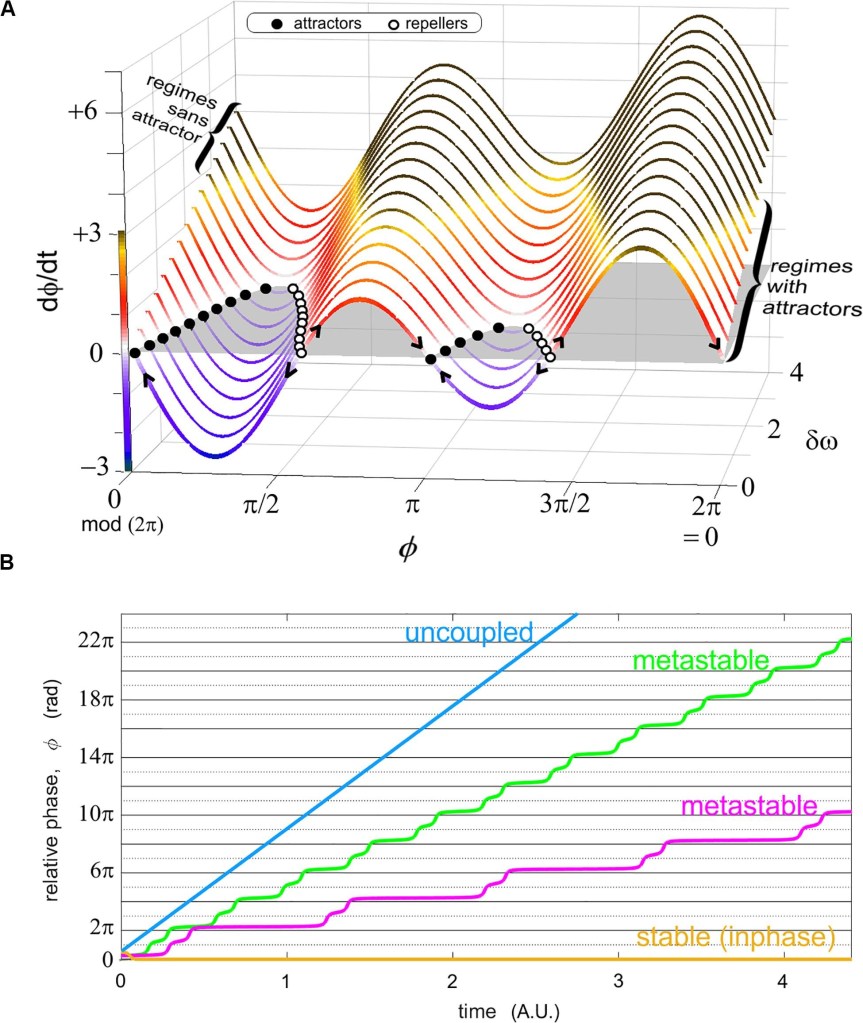
At the heart of this framework are two concepts: coordination and synchronisation. The key insight is that what matters most is not how much synchronisation there is, but how flexible it is. A healthy system can move fluidly between states of coupling and decoupling. It has what we call metastability: the dynamic balance between stability and flexibility that enables context-appropriate state transitions.

Dynamical disorders are conditions where this flexibility is lost. The system becomes trapped — either locked into rigid patterns of over-synchronisation, collapsed into under-activation, or fragmented into chaotic instability.

Four Dynamical Phenotypes

  • Hypervigilant — rigid over-synchronisation, constant threat-monitoring, suppressed physiological variability.
  • Collapsed — reduced synchronisation, affective numbing, social disengagement.
  • Chaotic — fragmented, rapid unpredictable transitions, erratic physiological patterns.
  • Balanced — flexible synchrony, context-sensitive regulation, high physiological complexity.

A New Direction for Research and Treatment

This represents a genuine paradigm shift — one that draws on complexity science, nonlinear dynamics, affective neuroscience, and decades of clinical research. It opens new possibilities: for understanding the mechanisms of change in psychotherapy, for personalising treatment to the individual’s coordination profile, and ultimately for developing a more complete science of human wellbeing.

At SPR Osaka 2026: Reimagining Psychotherapy Through Dynamical Systems

In June 2026, I had the privilege of presenting at the Society for Psychotherapy Research (SPR) Annual Conference in Osaka, Japan — one of the most stimulating gatherings in the field of psychotherapy research. This year’s conference brought together researchers, clinicians, and theorists from around the world to explore the frontiers of psychological treatment and its mechanisms of change.

I contributed two sessions, each approaching a shared question from different angles: What if the way we think about mental health and psychotherapy has been fundamentally incomplete — and what would change if we adopted a dynamical systems perspective?

Panel Presentation: Restoring Flexible Functional Synchrony

The first session was a panel presentation titled “Restoring Flexible Functional Synchrony: A Dynamical Systems Approach to Complex Emotional Needs.” The central argument: mental health conditions are not best understood as discrete symptom clusters, but as disorders of coordination flexibility — the capacity of the human system to synchronise, desynchronise, and transition between states in a context-appropriate way.

The focus was on Complex Emotional Needs (CEN) — a transdiagnostic presentation characterised by severe emotional dysregulation, unstable attachment, and interpersonal difficulties — as a compelling test case for this framework. These conditions show coordination dysregulation across multiple timescales: from autonomic nervous system rigidity at the millisecond scale, through affective instability across minutes, to interpersonal coordination failures across sessions and relationships.

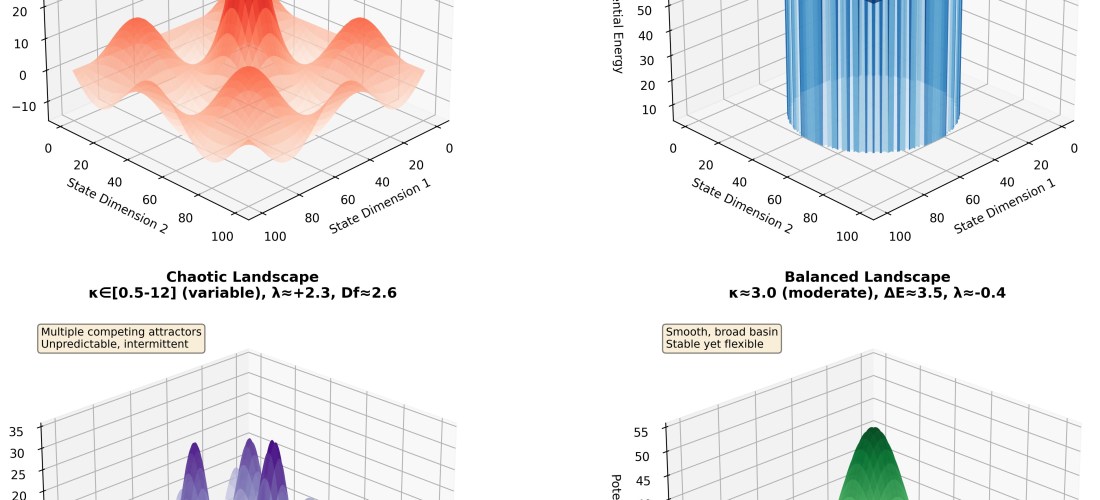
We presented four dynamical phenotypes — distinct attractor landscape profiles that characterise different patterns of coordination failure in CEN:

  • Hypervigilant — rigid over-synchronisation, deep narrow attractor basin, constant threat-monitoring
  • Collapsed — reduced synchronisation, flat attractor landscape, affective numbing and withdrawal
  • Chaotic — unstable coordination, multiple fragmented attractors, rapid dysregulation with low recovery
  • Balanced — flexible synchrony, moderate-depth wide basin, context-sensitive regulation

These phenotypes correspond to measurable physiological signatures and guide matched clinical intervention through the IDEAS Programme (Interventive Dynamic Emotion Assessment and Skills): an 8-week, group-based intervention for young people aged 16–25 with Complex Emotional Needs. A pilot study of 48 participants showed large effect sizes across clinical outcomes, maintained at 3-month follow-up, with differential response trajectories by phenotype.

Structured Discussion: Reimagining Psychotherapy as Coordination Restoration

The second session was a structured discussion: “Reimagining Psychotherapy as a Dynamical Treatment of Synchronization and Coordination.” This broader conceptual exploration opened a conversation about what it would mean to fundamentally reconceptualise psychotherapy — not as a technique that reduces symptoms, but as a process that restores flexible functional synchronisation across neural, physiological, and interpersonal domains.

The discussion centred on three questions: What distinguishes functional from dysfunctional synchrony across clinical presentations? How can coordination dynamics be measured as mechanisms of therapeutic change? And what are the implications for training and treatment development when psychotherapy is understood as coordination restoration rather than symptom management?

A key theme was the reconceptualisation of rupture and repair in the therapeutic relationship — not merely as relational events, but as dynamical phase transitions with measurable physiological signatures. Successful repair does not simply restore the previous state, but expands the attractor landscape, building resilience and flexibility.

Looking Ahead

Both sessions generated rich discussion and a genuine sense that the field is ready for this shift. The convergence of complexity science, affective neuroscience, and psychotherapy research is opening new possibilities for how we understand, measure, and treat psychological distress. I look forward to continuing this work and to the collaborations that emerged from Osaka.

Why Mental Health Treatment Keeps Failing the Same People — and a New Framework That Could Change That

Despite decades of research and a growing toolkit of evidence-based therapies, mental health services face a stubborn paradox: between 40 and 60 per cent of people with complex emotional difficulties don’t get better under current treatment protocols. For those living with severe emotional dysregulation, relationship instability, identity struggles, and recurring self-harm — conditions often grouped under the term Complex Emotional Needs (CEN) — this is not an abstract statistic. It is the reality of revolving doors, service discharge without recovery, and the exhausting sense that nothing seems to fit.

A new perspective article submitted to Frontiers in Human Neuroscience argues that this therapeutic impasse is not primarily a failure of effort or skill — it is a failure of the underlying model. Categorical diagnosis, the dominant framework through which mental health problems are identified and treated, may simply be the wrong map for the territory it is trying to chart.

The Problem with Categories

Standard diagnostic systems classify mental health conditions as discrete named categories: borderline personality disorder, complex PTSD, emotionally unstable personality disorder, and so on. This approach has generated decades of treatment research, but rests on an assumption that is increasingly difficult to defend: that there are meaningful, stable boundaries between conditions, and that people within a given category are fundamentally similar to one another.

Research tells a different story. Diagnostic categories in mental health show substantial overlap, extensive within-category variation, and poor ability to predict treatment response. Two people with identical diagnoses can respond completely differently to the same therapy. Critics have long argued that current categories are, at best, administrative conveniences rather than windows into the nature of the problems they describe.

“Rather than understanding psychopathology as the presence of pathological elements requiring removal, we reframe mental health conditions as failures of flexible functional synchronisation across nested bio-psychosocial scales.”

A Different Way of Seeing: Synchronisation and Dynamics

The new framework starts from a different premise. Instead of asking “which diagnosis does this person have?”, it asks: “how is this person’s nervous system organising itself, and what kind of flexibility or rigidity does it show?”

The human nervous system — from brainstem circuits regulating basic threat responses, through autonomic networks governing heart rate and breathing, to cortical systems that make sense of experience and manage relationships — functions as an enormously complex network of coupled oscillators. The healthy state, known as metastability, sits between rigid lockstep synchronisation and complete independence. In Complex Emotional Needs, this balance breaks down.

The paper draws on three converging scientific traditions: affective neuroscience (particularly Jaak Panksepp’s work on evolutionarily conserved emotional circuits), predictive processing theory (Karl Friston’s framework in which the brain is a prediction machine calibrating its models against incoming signals), and complexity science (the mathematical study of how coupled dynamical systems self-organise). All three point toward the same insight: CEN presentations are nervous systems stuck in particular dynamic patterns — patterns that can be characterised, measured, and matched to appropriate interventions.

The Attractor Landscape: A New Vocabulary for Emotional Life

Central to the framework is the concept of an attractor landscape. Imagine the state of someone’s nervous system as a ball rolling across hilly terrain. Valleys represent stable states the system gravitates toward; hills and ridges represent the energy required to transition between states. The shape of this terrain — how steep the valleys are, how high the barriers between them, whether the landscape is stable or shifting — determines the person’s characteristic emotional and relational patterns.

Using mathematical equations from coordination dynamics and numerical simulation, the research team derived four distinct landscape topologies, each corresponding to a clinically recognisable pattern of emotional experience.

Phenotype 1 — Hypervigilant

Sharp, narrow valleys with low barriers between them. The system is tightly wound, prone to sudden catastrophic shifts. Characterised by hyperarousal, threat sensitivity, and intense emotional reactivity punctuated by crashes. Corresponds to anxious-preoccupied attachment.

Phenotype 2 — Collapsed

Flat, featureless terrain bounded by very high barriers. The system is stuck, requiring enormous energy for any movement. Characterised by emotional numbing, motivational paralysis, and disconnection from internal experience. Corresponds to dismissive-avoidant attachment.

Phenotype 3 — Disorganised

Unstable, shifting terrain with no reliable valleys. Characterised by fragmented, unpredictable emotional responses and profound relationship instability. Corresponds to disorganised attachment.

Phenotype 4 — Balanced

Multiple moderate valleys connected by traversable ridges — the optimal metastable landscape. The system can settle, shift flexibly, and return to stability. Corresponds to secure attachment and represents the therapeutic target for the other three phenotypes.

Grounded in Biology, Not Theory Alone

The paper demonstrates that the four phenotypes map onto converging evidence from multiple scientific disciplines simultaneously. At the brain circuit level, Panksepp’s research anchors the Hypervigilant phenotype in chronic upregulation of FEAR circuitry, and the Collapsed phenotype in the neurobiological sequelae of prolonged GRIEF/PANIC followed by learned suppression. At the developmental level, the phenotypes map directly onto attachment classifications independently identified through decades of child observation research.

Perhaps most striking is the epigenetic layer. Research by Michael Meaney and colleagues has shown that early caregiving quality literally programmes the stress response system through DNA methylation — chemical modifications stable across the lifespan but not permanently fixed. The framework uses this to explain both why CEN patterns are so persistent and why therapeutic change is genuinely possible: attractor landscapes are biologically encoded but remain responsive to sustained relational experience of sufficient quality and duration.

Clinical Evidence: The IDEAS Pilot Study

The framework was directly motivated by results from the IDEAS pilot study, an 8-week modular intervention delivered to young people aged 16–25 within youth mental health services (N=48). The study demonstrated large effect sizes for emotional dysregulation (Cohen’s d = 1.15), moderate-large effects for interpersonal functioning (d = 0.82), and a successful discharge rate of 68.7% — substantially exceeding the service’s baseline rate of approximately 42% for comparable presentations. Improvements were maintained at 3-month follow-up.

The IDEAS intervention did not apply a fixed protocol. Clinicians personalised which therapeutic modules each person received and in what sequence — effectively engaging in “inferential phenotyping.” This proved effective but depended on individual practitioner skill. The new theoretical framework is designed to formalise and scale precisely that clinical insight.

Matching Treatment to Landscape

One of the most practically significant implications is the framework’s account of why particular therapeutic ingredients work for particular presentations. For the Hypervigilant phenotype, the primary target is landscape flattening: mindfulness and distress tolerance skills work because they flatten rather than eliminate emotional responses. For the Collapsed phenotype, the barrier height is the problem — insight-oriented work tends to fail not because the person lacks capacity but because the mechanism of dysfunction lies upstream of thinking; behavioural activation works by supplying external energy to overcome the barriers. For the Disorganised phenotype, the priority is creating stable structure where none exists, building attractor basins before attempting flexibility work.

Measurement and the Road Ahead

The framework makes specific, falsifiable predictions testable in future research. Heart rate variability analysed using nonlinear methods should produce characteristic signatures for each phenotype. Physiological synchrony between patient and therapist, measured using surrogate statistical methods that distinguish genuine coupling from coincidence, should track with therapeutic progress.

The paper proposes a three-phase validation programme: establishing phenotype reliability and predictive validity; conducting randomised trials comparing phenotype-matched versus standard treatment (primary hypothesis: effect size advantage d = 0.3–0.5); and examining implementation at scale with attention to health equity.

“The challenge and opportunity before the field is to embrace complexity without abandoning rigour, to pursue precision without losing humanity, and to advance scientific understanding while remaining grounded in the lived experience of those seeking help.”

The paper is currently under preparation for submission to Frontiers in Human Neuroscience as a Perspective Article. Further updates, including trial registration and data repository details, will be posted here as they become available.

When Mind and Body Fall Out of Sync: A New Framework for Understanding Health

What if many of the conditions we treat as purely psychological or medical problems are actually problems of coordination — of systems that have lost their natural rhythm?

That is the central idea behind a new theoretical framework currently in development in our research group. Drawing on tools from physics, complexity science, and clinical neuroscience, we propose a way of understanding — and potentially reshaping — how the human mind and body organise themselves over time.

Life as an Orchestra

Think of the human body and mind as an orchestra. Your heartbeat, your breathing, your brain activity, your thoughts, your emotions, and even your social interactions all have their own rhythms. In a healthy person, these rhythms don’t all play the same note at the same time — that would be rigid and mechanical. Instead, they coordinate fluidly, coming together and drifting apart as circumstances demand. Like a good improvisation, there is both structure and spontaneity.

The key concept here is metastability: a state of dynamic balance between order and flexibility. It’s the sweet spot where a system is neither too rigid nor too chaotic — where it can shift smoothly between different patterns without getting stuck or dissolving into noise.

When Coordination Goes Wrong

Many conditions we encounter in clinical practice — from neurological disorders to emotional difficulties to interpersonal struggles — can be understood through this lens as coordination problems. The system doesn’t break in any single component. Rather, the way the components talk to each other becomes dysregulated. Sometimes they become too locked together, too rigid. Sometimes they scatter, losing coherence altogether.

Traditional clinical models often look for what’s wrong with a single part — a neurotransmitter, a thought pattern, a behaviour. Our framework shifts the focus to the relationships between parts, asking: how are neural activity, the autonomic nervous system, cognition, emotion, and interpersonal behaviour coordinating across time?

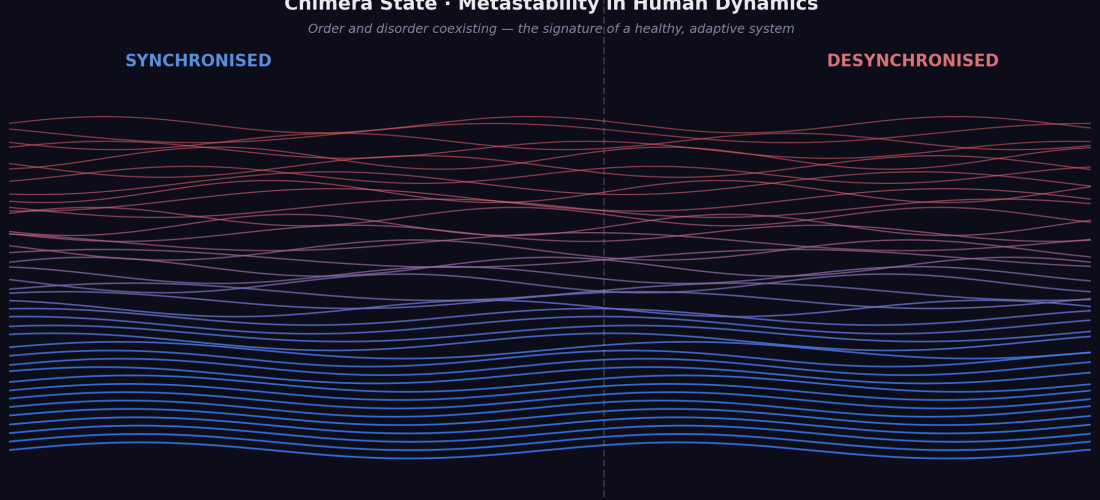
To capture this, we draw on the concept of chimera states, borrowed from physics. A chimera state is when a system contains both synchronised and desynchronised regions simultaneously — some parts marching in step, others doing their own thing. This turns out to be a surprisingly good description of how healthy human systems actually function. Problems arise when this natural mix gets distorted: too much synchrony, and the system becomes rigid; too little, and it becomes disorganised.

A Mathematical Map for Clinical Practice

We introduce the Coordination Balancing Algorithm (CBA), a mathematical framework that formalises these ideas and translates them into a practical clinical tool.

Rather than aiming to return a patient to a fixed ‘normal’ set point — the traditional homeostatic goal — the CBA aims to restore metastability: the capacity to move fluidly between coordination states as context demands. Health, in this view, is not the absence of change. It is the ability to change appropriately.

The framework uses established tools from nonlinear science — including Recurrence Quantification Analysis and entropy measures — to monitor coordination dynamics in real time. These tools can detect when a system is becoming too rigid or too scattered, and identify the precise moments when it is most open to change (what physicists call critical slowing down near a tipping point). Catching these windows of opportunity can make interventions far more effective — timed to when the system is naturally most plastic and ready to reorganise.

What This Means in Practice

Clinically, this shifts the therapist’s or clinician’s role from ‘symptom reducer’ to ‘landscape navigator’ — someone who uses carefully calibrated interventions to gently reshape coordination patterns in a patient’s system. Instead of pushing a system toward a fixed endpoint, the goal is to expand its repertoire: more accessible states, easier transitions, greater resilience.

This framework applies not just to individuals — it extends to interpersonal dynamics, including coordination between a therapist and patient, between family members, or between any two people engaged in a meaningful interaction.

Looking Forward

This is, at this stage, a theoretical and methodological contribution. The mathematical foundations are robust, and there is encouraging preliminary evidence from multimodal clinical studies. The next step is systematic empirical validation across diverse clinical populations — translating these ideas into tools that practising clinicians can use.

image description

We are working toward that, and we look forward to sharing more as the research develops.

Human Synchronization Maps—The Hybrid Consciousness ofthe Embodied Mind

I published a new paper in a special issue of Entropy I edited with Wolfgang Tschacher. This paper is bringing my research group work of the last 15 years to a higher theoretical level. Is not by chance that there is an opening quote by Henri Poincaré: “Science is built up with facts, as a house is with stones. However, a collection of facts is no more a science than a heap of stones is a house.”

The insights that this paper is willing to provide are about the nature of our house of human dynamics. In the last years, we explored the bio-semiotic nature of communication streams weaving emotions, bodies and language. We tried to clarify the coupling and decoupling dynamics of these biosemiotics streams. We investigated intraindividual and interpersonal relations as coevolution dynamics of hybrid couplings, that we had called Mind Force. We highlighted evidence of these hybrid dynamics that are also called chimaera states.

Human dynamics are so complex and prone to indeterminacy and randomness that even deterministic chaos might be considered, in many cases, as a reductionist simplification. Therefore, probabilistic models can include elements of randomness better than deterministic (chaos) models. Probabilistic models can better work if they focus on mesoscopic dynamics, just in a good balance between top-down and bottom-up. We identified that in language semiotics this mid-level is represented by morphemes as the sub-components of words that cannot be decomposed without losing meaning and grammatical function. Morphemes lead semiotic dynamics as they can embed meaning, rhythm and musicality. Morphemes can be considered as semiotic quanta of information in natural language, as they are the basic lexical item in a language. This can open a way to quantum field studies in biosemiotics and general human dynamics.

Chimera of Arezzo, Etruscan bronze c. 400 BC

On time of balance

Feeling the balance in constant transitioning while getting a sense of standing on a grounding time.

Some inspiring quotes…

“And something’s always missing, a glass, a breeze, a phrase,

And the more one invents and enjoys, the more life hurts.”

Fernando Pessoa

“It must not be claimed that anyone can sense time by

itself apart from the movement of things.”

Lucretius, De Rerum Natura

“But they will teach us that Eternity is the Standing still of the Present

Time, a Nunc-stans (as the schools call it); which neither they, nor any

else understand, no more than they would a Hic-stans for an Infinite

greatness of Place.”

Thomas Hobbes, Leviathan, IV, 46

The specious present, is “the prototype of all conceived times…

the short duration of which we are immediately and incessantly sensible”

William James

“From Aither, Time made a shining egg: the progeny of Aither and Chaos.”

Protogonos Theogony

Perhaps the constantly shifting balance between presence and transformation is the essence of life.

It reveals its beauty, induces contemplation and reverie, provoking the mind as it enthrals emotion.

Photo by rovenimages.com on Pexels.com